
Modern leak detection eliminates guesswork. Using a combination of electronic, acoustic, thermal, and tracer gas technologies, certified specialists locate subterranean pipe ruptures to within inches without damaging flooring or foundations.
| Specification / Diagnostic Metric | Engineering Standard / Detail |
|---|---|
| Diagnostic Accuracy | Pinpoint accuracy within a 6-to-12 inch radius |
| Standard Protocol | Pressure Decay → Pipe Tracing → Thermal Scan → Acoustic Confirmation |
| Specialized Gas Option | Non-toxic 95/5 Nitrogen-Hydrogen tracer gas for micro-leaks |
| Average Testing Duration | 1.5 to 2.5 hours for full structural isolation |
| Non-Destructive Guarantee | 100% non-invasive until exact repair location is validated |
| Report Documentation | Formal engineering diagnostic report for insurance HO-3 claims |
The Four-Stage Non-Invasive Diagnostic Protocol
Professional slab leak detection is a methodical diagnostic science. Certified technicians execute four sequential phases to eliminate guesswork and prevent unnecessary property damage:
Stage 1: Hydrostatic Pressure Isolation
The technician attaches precision oil-filled pressure test gauges to hot and cold water system manifolds. By closing individual shutoff valves, the technician isolates isolated branches of the domestic plumbing system. A rapid needle drop confirms which specific supply line is depressurizing.
Stage 2: Electromagnetic Pipe Line Tracing
Before locating the leak, the technician must locate the pipe. Plumbers attach a high-frequency line transmitter to the plumbing fixture. The electromagnetic signal travels along the metallic copper line, which is detected above ground with a digital receiver wand. This creates a detailed chalk map of the pipe's path directly on the floor.
Stage 3: Radiometric Thermal Scanning
If the leaking line is on the domestic hot water side, an infrared camera scans the mapped pipe trajectory to locate thermal bloom signatures radiating through concrete and tile.
Stage 4: Acoustic Resonance Pinpointing
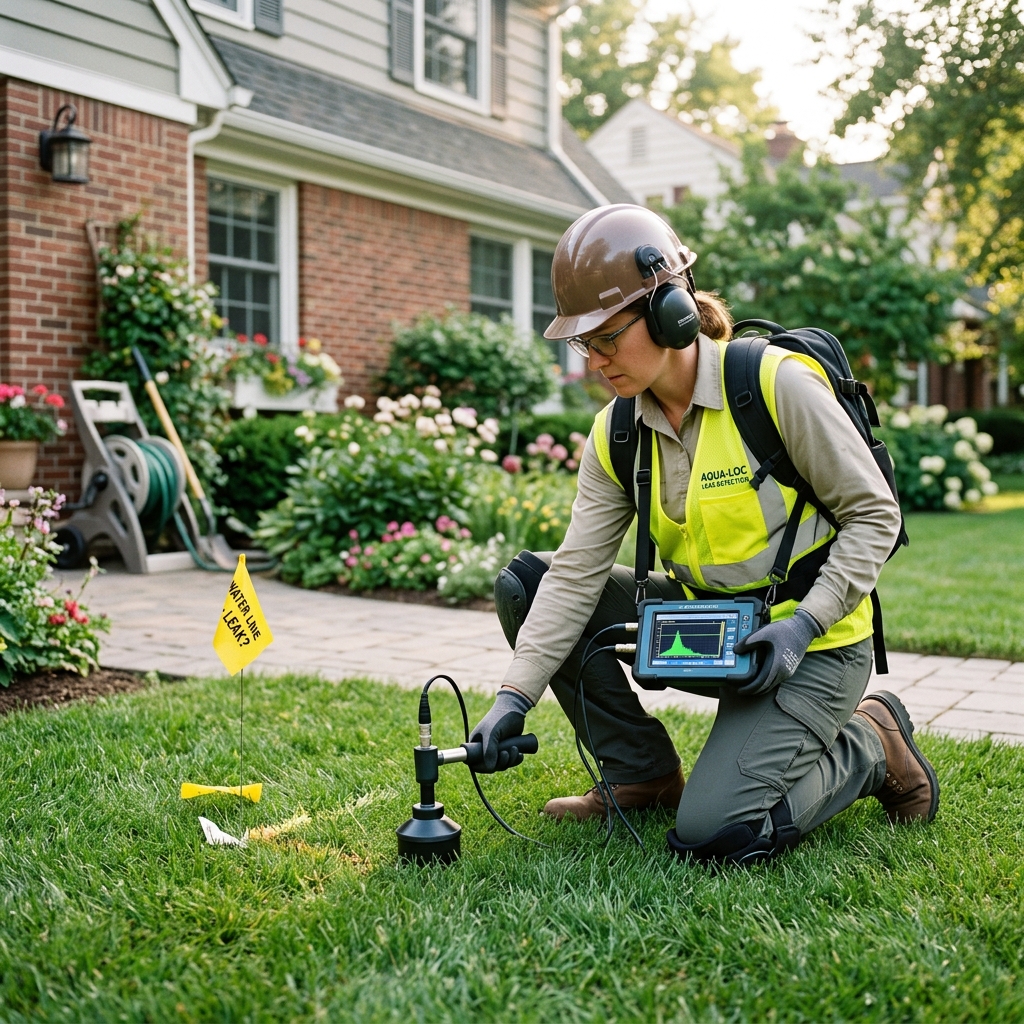
Using seismic ground microphones and frequency notch filters, the technician walks the chalk line, measuring decibel levels at 1-foot intervals to identify the absolute apex of sound intensity.
Tracer Gas Testing: For Complex or Low-Volume Leaks
When an acoustic leak is masked by ambient industrial noise or deep soil layers, technicians evacuate the line and introduce a 95% nitrogen / 5% hydrogen gas mixture. Because hydrogen molecules are tiny and lighter than air, they rise rapidly through concrete and are detected at ground level with sub-ppm hydrogen gas sniffers.