
Because slab leaks hide under solid concrete, they rarely present as dramatic geysers. Instead, they produce subtle mechanical, thermal, and acoustic warning signals. Recognizing these eight symptoms early can prevent catastrophic structural damage.
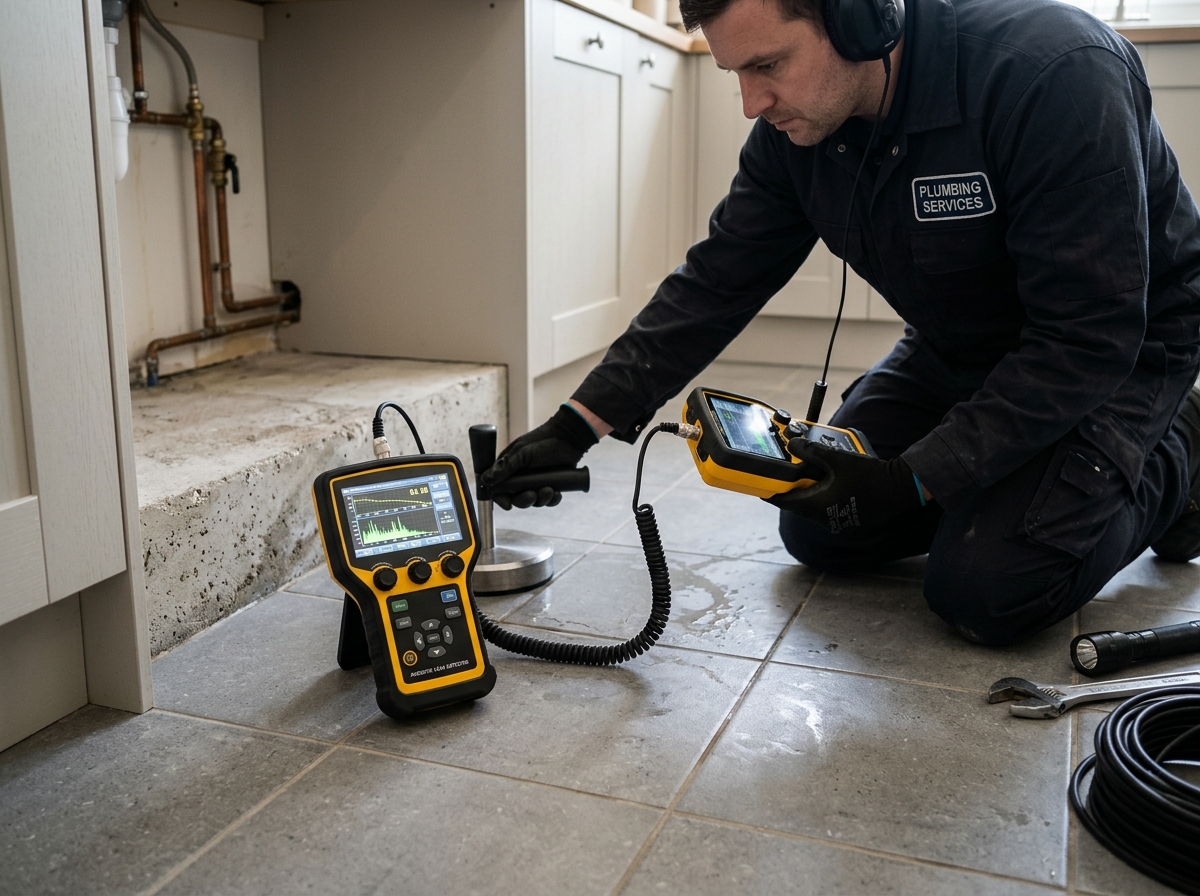
| Specification / Diagnostic Metric | Engineering Standard / Detail |
|---|---|
| Primary Early Indicator | Unexplained water bill spike without increased household usage |
| Sensory Signs | Warm floor spots, sound of rushing water behind silent walls |
| Physical Signs | Spongy flooring, salt efflorescence on tile grout, baseboard rot |
| Diagnostic Verification | Water meter low-flow leak indicator wheel test |
| Critical Time Window | Investigate within 24–48 hours of detecting active symptoms |
| Average Water Loss | 200 to 3,000+ gallons per day depending on orifice size |
The 8 Critical Indicators of a Buried Slab Leak
1. The Spinning Water Meter (The Definitive Test)
Turn off all indoor and outdoor water fixtures, icemakers, and irrigation timers. Locate your water meter at the municipal curb box. Inspect the small triangular or star-shaped low-flow leak indicator. If this wheel continues turning slowly, water is escaping under continuous pressure somewhere in your plumbing envelope.
2. Unexplained Thermal Hot Spots on Flooring
If you step on a warm patch of tile, vinyl, or wood flooring—especially barefoot—you are likely feeling thermal conduction from a ruptured hot water supply line directly beneath that slab section.
3. The Phantom Sound of Running Water
A continuous faint hissing, rushing, or humming noise heard late at night when the house is silent, typically localized near bathrooms, laundry rooms, or water heater closets.
4. Dramatic Spikes in Municipal Water Utility Bills
A sudden, unexplained jump in your monthly water bill from $80 to $250 or more is one of the most common first notifications that a sub-slab line has suffered a pinhole rupture.
Homeowner Quick Diagnostic Checklist
• Are all faucets closed while the water meter indicator continues moving?
• Is the water heater burner constantly firing even when no hot water is in use?
• Do you feel localized warmth or dampness on ground-floor surfaces?
• Has your water pressure suddenly dropped during multiple fixture usage?
5. Salt Efflorescence and Grout Discoloration
As subterranean moisture wicks upward through concrete, it dissolves foundation mineral salts. When this moisture evaporates at floor level, it leaves behind a white powdery substance (efflorescence) along tile grout lines or basement walls.
6. Warped, Buckling, or Cupping Flooring
Engineered hardwood, laminate planks, or luxury vinyl tiles that begin lifting, separating, or feeling spongy underfoot indicate subfloor moisture saturation.
7. Constantly Firing Water Heater
If your gas water heater burner or electric heating elements run almost continuously around the clock, you likely have a hot water slab leak continuously draining tank capacity.
8. Musty Odors and Baseboard Mold
Damp soil vapors migrating through foundation pores saturate bottom drywall plates and carpeting, creating a distinct earthy or moldy smell that air fresheners cannot mask.